5 MYTHS ABOUT COLLAGEN: DR. SCHAAF GIVES US THE LOWDOWN

Collagen is a firm favourite ingredient in anti-ageing skincare. It’s hailed for helping to improve the look and feel of the skin, but collagen comes with its fair share of misinformation. We asked Dr. Schaaf to bust some of these collagen myths.

Updated on : August 28 2026

1. COLLAGEN IS ONLY GOOD FOR THE SKIN – MYTH?

DR. SCHAAF:

Many of us are familiar with collagen primarily as an ingredient in anti-ageing skincare products. The structural protein in the skin doesn't just help combat wrinkles and loss of firmness – it can do a lot more. Basically, collagen is essential for the entire body because it gives tissues their strength and elasticity. It supports skin, hair, nails, bones, muscles, tendons and joints.

If there is too little collagen in the body, this soon becomes noticeable: the skin loses its firmness, hair becomes less shiny, nails become brittle, and problems with the musculoskeletal system can occur. Collagen is therefore often used in the form of powder, capsules or drinkable 'health shots' and even skincare to help compensate for potential deficiencies.

2. COLLAGEN AND COLLAGEN PEPTIDES ARE THE SAME – MYTH?

DR. SCHAAF:

If you want to fight these signs of collagen loss in the skin, you first have to understand the difference between collagen and collagen peptides. Collagen and collagen peptides are not exactly the same thing, but they are closely linked. Collagen is the structural protein itself.

It is produced by the body and consists of amino acids that are assembled into peptide chains. Collagen peptides are, strictly speaking, fragments of collagen. And that's exactly what gives them a clear advantage: collagen peptides have a smaller molecular size, which makes them easier to absorb than the larger protein.


3. YOU ONLY NEED COLLAGEN PEPTIDES FROM THE AGE OF 40 ONWARDS – MYTH?

This is indeed a myth. While many people notice the signs of aging more clearly in their 40s, the skin's natural collagen production actually begins to slow down much earlier—as early as your mid-20s.

The dermis (the layer of skin below the surface) relies on a dense network of collagen and elastin fibers to stay firm and smooth. As we age, our body produces less collagen, and the existing fibers begin to weaken. This gradual decline is what eventually leads to, the appearance of fine lines and wrinkles, a loss of skin firmness and less "bounce back" or elasticity in the skin.

By supporting your skin's collagen levels in your 20s and 30s, you are essentially helping to preserve your skin's foundation, rather than trying to "fix" it later on.

DR. SCHAAF:

You can start using collagen well before the age of 40 because the process of skin ageing naturally begins much earlier – in our twenties. As metabolism slows, the body's production of collagen also decreases. We now know that the natural decline in collagen production progresses by around 1% per year from the age of 25 onward, though this usually only becomes visible between the ages of 30 and 40.

You can counteract the skin signs of this invisible process in the background well in advance by using innovative skincare products containing effective anti-ageing ingredients.

4. COLLAGEN HAS AN INSTANT EFFECT – MYTH?

How long does collagen take to work? Dr. Schaff is here to clear up the confusion.

DR. SCHAAF:

In its function as a structural protein, collagen plays a key role in the structure of the skin. Its fibres form a stable framework to ensure strength and elasticity. The more the collagen content in the skin decreases – for example, due to natural ageing processes – the more unstable the supporting structure becomes. As a result, the skin loses its youthful firmness and elasticity. Compensating for this can take some time. For long-term visible results, patience and consistency is key. The most important thing is ensuring regular use.


5. COLLAGEN IN FACE CREAMS DOES NOTHING – MYTH?

If you’re wondering ‘Does collagen actually work?’, Dr. Schaff is here with the answer.


DR. SCHAAF:

We’re constantly hearing that collagen as an active ingredient in creams is of no use – at least not in the long term. That is only partially true. Collagen is made up of molecules that can be too large to penetrate through the surface of the skin. They can make the skin feel smoother and firmer, but this effect is usually short-lived.

Collagen peptides are able to penetrate through the epidermis and when carefully formulated with other effective skincare ingredients helps to boost the look and feel of skin affected by collagen loss. But here, too, time and patience are key for your skin to appear tighter and firmer.

CHRYSANTHI KAVAZI ON LIFTACTIV COLLAGEN SPECIALIST


"I've been using the LIFTACTIV Collagen Specialist Cream and I'm simply delighted with the results! My skin's elasticity and firmness have improved significantly and my first wrinkles appear almost disappeared. For a bounce effect and firm skin, you simply need collagen peptides, I've learned. I feel so much more comfortable in my skin! The cream has truly become my daily companion and I can no longer imagine my skincare routine without it!"

Actress,
Chryssanthi Kavazi

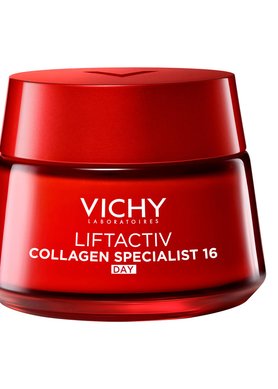
Actress and influencer, Chryssanthi Kavazi, has been using our LIFTACTIV Collagen Specialist Cream for several years and is more than satisfied with her results. In addition to the day cream, with three times more collagen peptides than its previous version, her daily beauty routine also includes our night cream.

As you can see, collagen offers numerous benefits for the entire body. Despite the myths about collagen, when used correctly, the active ingredient also enriches your anti-ageing skincare routine and restores the skin's natural firmness, suppleness and radiance. If you want to treat your skin, a cream or serum containing collagen peptides is a must-have for your daily skincare routine, such as our LiftActiv Collagen Specialist 16 Bonding Serum and LiftActiv Collagen Specialist 16 Day Cream.

Frequently Asked Questions
Collagen Myths FAQs

What are some common myths about collagen?

Collagen is often hailed as a skincare miracle, but not everything you hear is true. Here are some of the most common myths:

● Myth 1: Applying collagen directly to the skin replaces lost collagen.
False: Collagen molecules are generally too large to penetrate the skin effectively. Instead, look for collagen peptides, which are smaller fragments, or ingredients that help protect and support your skin's natural collagen- building processes.

● Myth 2: Only mature skin needs collagen support.
False: Collagen production starts to decline in your mid-20s. Supporting it early on with targeted skincare and healthy lifestyle habits can help maintain skin firmness and elasticity over time.

● Myth 3: Collagen supplements work instantly.
False: While some studies suggest collagen supplements may help improve skin’s hydration and elasticity, results take time and consistency, and work best when combined with a healthy lifestyle.

● Myth 4: All collagen is the same.
False: There are over 16 different types of collagen (e.g., Type I, II, III), each serving unique functions in the body. In skincare Type I collagen is most abundant in the skin.

What age should you start using collagen?

Collagen production naturally begins to decline in your 20’s. While you may not notice visible signs of ageing right away, incorporating collagen-supporting skincare in your 20s and 30s can help maintain skin firmness, elasticity, and hydration over time.

Starting with products that contain ingredients like collagen peptides, Vitamin C, and hyaluronic acid, which can help support your skin. Think of it as proactive care to preserve your skin’s youthful appearance, rather than waiting to correct visible signs later on.

How long does collagen take to work?

How fast does collagen work? The results of collagen-based products or supplements are not immediate, and visible improvements can take time. For topical products, you may start to notice smoother looking, more hydrated skin within a few weeks of consistent use. However, improvements in skin elasticity and firmness can take longer to become noticeable.

Keep in mind that the best results come from long-term use, combined with a healthy lifestyle and a balanced skincare routine.