The 5 Most Common Myths About Dandruff
Updated on : August 13 2026

Let’s be honest – having dandruff can be annoying, frustrating and at times feel it can feel embarrassing. It might even feel like dandruff is dictating your day to day, from your haircare routine to your wardrobe choices. If you’ve been searching for ways to manage it, you’ll likely come across plenty of tips. But here’s the thing – the most common advice often doesn’t deliver real results. We’re here to break down the myths about dandruff, and explain how to effectively manage it.
1. Wash your hair as little as possible
Have you’ve ever wondered if you have dandruff, should you shampoo every day? Regardless of whether you have an oily or dry scalp, you often hear advice that you shouldn’t wash your hair every day. However, the right frequency of hair washing isn’t a one size fits all.
In fact, washing your hair daily may not be more effective than washing it once or twice weekly. It is about finding the right rhythm for your hair needs, the right habits and the right products. For example, if your hair gets greasy quickly after washing, your scalp feels itchy and your dandruff looks worse, you may need to consider other factors that may be contributing to this.
2. Let your hair air dry
Hot air from a hair dryer can cause damage to your hair and even irritate sensitive scalps. But does blow-drying your hair increase dandruff? Yes and no! It hasn’t been proven that either blow-drying or not blow-drying your hair increases dandruff. If your scalp is very dry and flaky, hot air can sometimes dry it out even further.
Conversely, there are reports of people with oily scalps who notice flakiness increasing when they let their hair air dry. It is suspected that a damp scalp promotes the growth of the fungus that causes dandruff. If this is something you find, you can blow-dry your hair on a medium or lowest setting to help better protect your hair and scalp.
3. Home remedies for dandruff
Home remedies that tackle dandruff are often recommended on social media – and the possibilities seem endless. Rosemary oil, olive oil, coconut oil, tea tree oil, apple cider vinegar, egg yolk or herbal rinses are just some of the home remedies for dandruff that are often mentioned. The problem: There are usually no scientific studies that prove the effectiveness of these remedies. Here you can only rely on the experience of individual people.
In addition, home remedies always carry a risk of potential allergies or intolerances as not every home remedy is suitable for every scalp. Instead, we recommend dermatologist-approved products with scientifically backed ingredients such as Selenium Disulphide, Salicylic Acid and Piroctone Olamine.
4. Brush out dandruff
At first glance, it seems quite logical to simply brush out any loose flakes with a firm brush. However, brushing too often and vigorously can irritate the scalp, stimulate excess sebum production, make flakes appear more visible between hair strands, and even weaken hair to the point of thinning.
Instead, it is advisable to gently comb out the flakes whilst hair is damp – ideally directly during or after washing your hair, when the flakes are a little looser due to the warm water. To do this, carefully guide a wide-toothed comb with rounded teeth through the hair without putting too much strain on the scalp. Then rinse the hair again and clean the comb thoroughly to remove sebum and dandruff as well as any residue from products.
When hair is dry, opt for a soft-bristled brush to prevent irritating the scalp. Hard or rough bristles can scratch and further irritate an already sensitive, itchy scalp and potential make the dandruff even worse.
Instead, it is advisable to gently comb out the flakes whilst hair is damp – ideally directly during or after washing your hair, when the flakes are a little looser due to the warm water. To do this, carefully guide a wide-toothed comb with rounded teeth through the hair without putting too much strain on the scalp. Then rinse the hair again and clean the comb thoroughly to remove sebum and dandruff as well as any residue from products.
When hair is dry, opt for a soft-bristled brush to prevent irritating the scalp. Hard or rough bristles can scratch and further irritate an already sensitive, itchy scalp and potential make the dandruff even worse.
5. Drying anti-dandruff shampoo
Anti-dandruff shampoos are wonderful for bringing the scalp back into balance. They contain active ingredients that help eliminate visible dandruff flakes and care for the scalp. However, it is important to choose the right shampoo for your scalp type.
For example, for a dry scalp, moisturising ingredients are particularly important, while an oily scalp often benefits from formulations with oil-reducing salicylic acid. In general, your anti-dandruff shampoo shouldn’t dry out the scalp or contain any ingredients that could further irritate the scalp. That’s why it’s best to use products specifically formulated for sensitive scalps, to help nourish and soothe the skin. It’s also always important to rinse the shampoo very thoroughly so that no residue remains on the scalp.
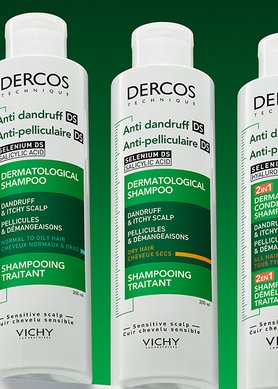
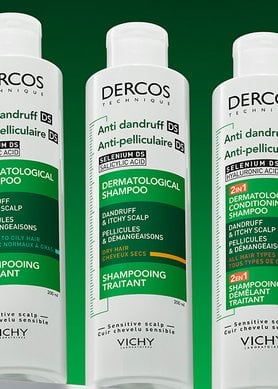
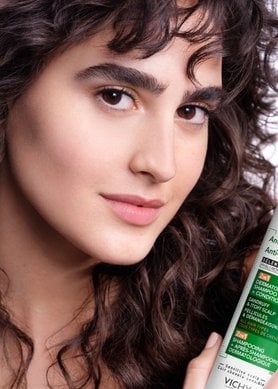
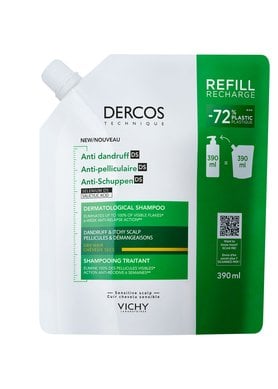
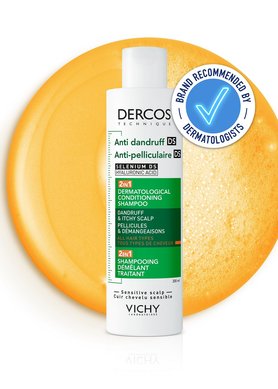
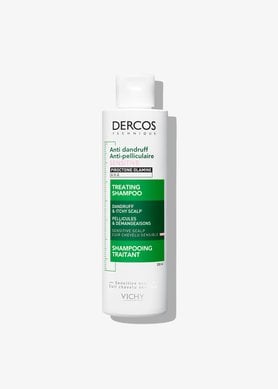
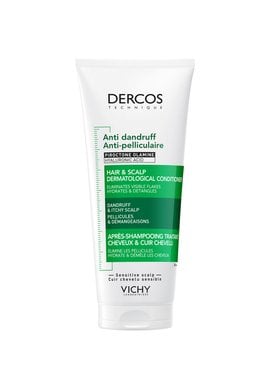
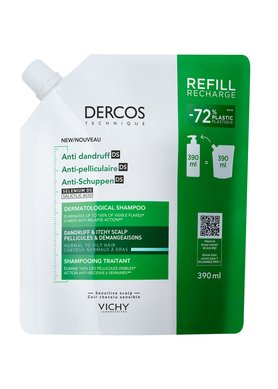
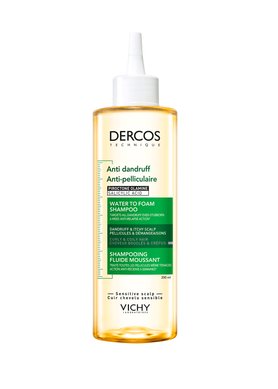
Don't feel like experimenting? Then try our Vichy DERCOS shampoos. Our anti-dandruff shampoos are available for dry hair , oily hair, sensitive scalp and for curly, coily hair as well as a 2-in-1 for added conditioning, so you can choose the right product that works for you and your scalp. It eliminates up to 100% of visible flakes from 1st use* and provides anti-dandruff protection for up to 6 weeks**.
*Consumer test on 262 subjects after 2 weeks of regular use
**Clinical study on 32 subjects after 4 weeks of use and 6 weeks of remanence
For example, for a dry scalp, moisturising ingredients are particularly important, while an oily scalp often benefits from formulations with oil-reducing salicylic acid. In general, your anti-dandruff shampoo shouldn’t dry out the scalp or contain any ingredients that could further irritate the scalp. That’s why it’s best to use products specifically formulated for sensitive scalps, to help nourish and soothe the skin. It’s also always important to rinse the shampoo very thoroughly so that no residue remains on the scalp.
Don't feel like experimenting? Then try our Vichy DERCOS shampoos. Our anti-dandruff shampoos are available for dry hair , oily hair, sensitive scalp and for curly, coily hair as well as a 2-in-1 for added conditioning, so you can choose the right product that works for you and your scalp. It eliminates up to 100% of visible flakes from 1st use* and provides anti-dandruff protection for up to 6 weeks**.
*Consumer test on 262 subjects after 2 weeks of regular use
**Clinical study on 32 subjects after 4 weeks of use and 6 weeks of remanence

Dandruff Prevention Checklist:
- Find your own rhythm for the frequency of hair washing
- Dry your hair gently
- Avoid using home remedies for dandruff
- Carefully comb out dandruff when washing your hair
- Choose the right anti-dandruff shampoo for your scalp type
There are numerous tips for dealing with dandruff, but dandruff doesn’t have a one-size-fits-all solution. While one or two tips can work for some people, the desired effect may not be achieved for others. In order to better manage dandruff in both the short and long term, it is important to focus on caring for your scalp. This, among other things, includes choosing the right shampoo that is tailored to the needs of your scalp and hair. However if your dandruff becomes extremely persistent or recurring, or you notice pronounced redness, severe itchy, hair loss or a wet scalp, it is advisable to seek medical advice from your GP or dermatologist.

Frequently Asked Questions
Dandruff Myths FAQs
If you have dandruff, should you shampoo every day?
Not necessarily. While it’s important to keep your scalp clean, shampooing every day isn’t always the best approach for managing dandruff – especially if you have a dry or sensitive scalp. Over-washing can strip the scalp of its natural oils, potentially making dandruff worse. Instead, focus on finding a washing routine that suits your hair type and scalp condition. Using a targeted anti-dandruff shampoo as directed is more effective than washing more frequently.
Is dandruff in men more common than in women?
Yes, dandruff in men does tend to be more common than dandruff in women. This is partly due to differences in hormones – specifically androgens, which can influence sebum production on the scalp. Men also typically have larger sebaceous glands, which may contribute to conditions like dandruff. However, anyone can experience dandruff, regardless of gender, and the most effective way to manage it is by using the right scalp care products tailored to your needs.
Can stress cause dandruff?
Stress itself doesn’t directly cause dandruff, but it can be a contributing factor. High stress levels may weaken the immune system, making the scalp more sensitive and prone to irritation or flare-ups of underlying conditions like seborrhoeic dermatitis – a common cause of dandruff. Stress can also trigger habits like poor sleep or irregular hair-washing routines, which may worsen symptoms. Managing stress alongside using a suitable anti-dandruff shampoo can help keep your scalp healthier.